

Open Space Technology - Canada
Creating Space for What Matters Most
When organizations face complex challenges, the most important conversations are often the ones that never make it onto the agenda. Open Space Technology creates the conditions for people to self-organize around what matters most, generating engagement, ownership, and meaningful action.
No Commitment Required
ORGANIZATIONAL Challenges
The Cost of
Missed Conversations
Organizations often invest significant time and resources bringing people together, yet many of the conversations that matter most never happen. Traditional agendas can unintentionally limit participation, suppress emerging ideas, and overlook the wisdom distributed throughout the system.
When people have little influence over what is discussed, engagement declines, ownership diminishes, and opportunities for innovation are often missed.
Traditional Approaches
Topics are defined in advance, participation is largely passive, and the most pressing issues often remain outside the conversation.
Open Space Technology
Participants create the agenda together, self-organize around shared interests, and take ownership of the conversations and actions that emerge.
The Philosophy of Open Space
Trusting Collective Wisdom
Open Space Technology was developed by Harrison Owen after observing that the most valuable conversations at conferences often occurred during breaks, meals, and informal gatherings rather than within the formal agenda.
His insight was simple yet profound: when people care deeply about an issue and are given the freedom to organize themselves, meaningful work happens.
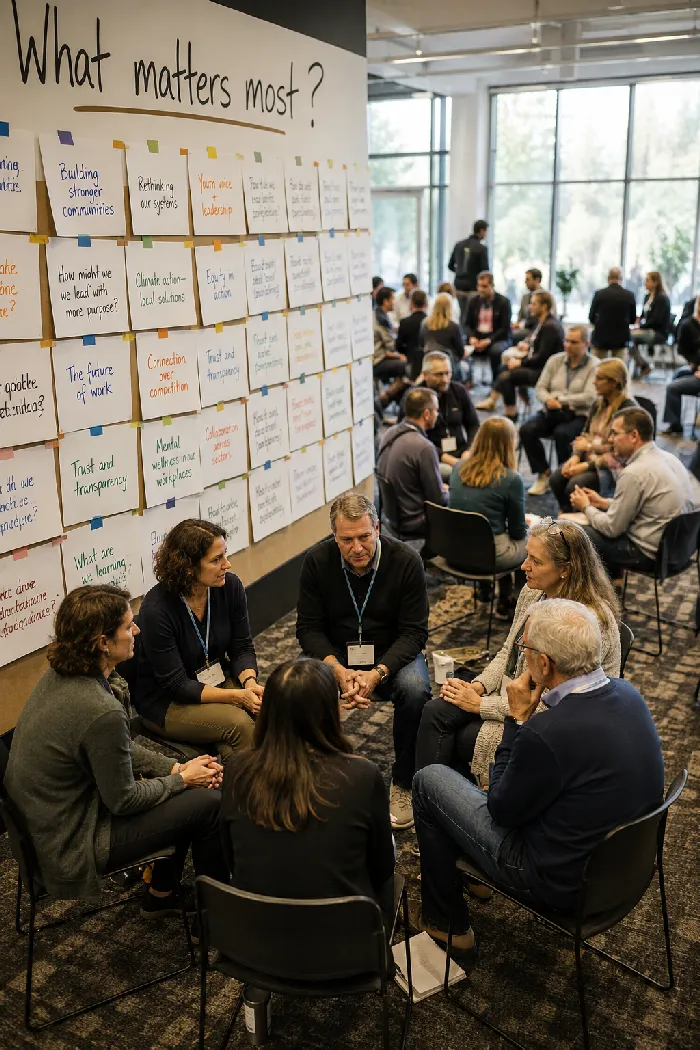
Open Space creates a framework that balances purpose with self-organization. Rather than controlling every conversation, leaders create the conditions for participation, responsibility, and emergence.
This approach is particularly valuable when organizations face complexity, uncertainty, competing priorities, or challenges that no single individual can solve alone.
The Open Space Process
How Self Organization Works
Open Space Technology operates on four guiding principles and one 'law'.
These tenets create the container for high-engagement, creativity, and self-directed collaboration.

Whoever comes is the right people
Release the need for specific titles or roles. The individuals who choose to attend are exactly the ones with the passion and insight needed to drive the conversation forward.
Whatever happens is the only thing that could have
A focus on the present moment. By letting go of rigid expectations, teams open themselves up to unexpected synergies, innovative solutions, and authentic dialogue.


Whenever it starts is the right time
Creativity and breakthroughs cannot be strictly scheduled. The energy of the group dictates the flow, ensuring that discussions begin when inspiration naturally strikes.
When it's over, it's over
If a topic is resolved in 15 minutes, move on. If it takes two hours, let it breathe. This principle eliminates wasted time and respects the natural lifecycle of a conversation.
The Law of Mobility (Two Feet)
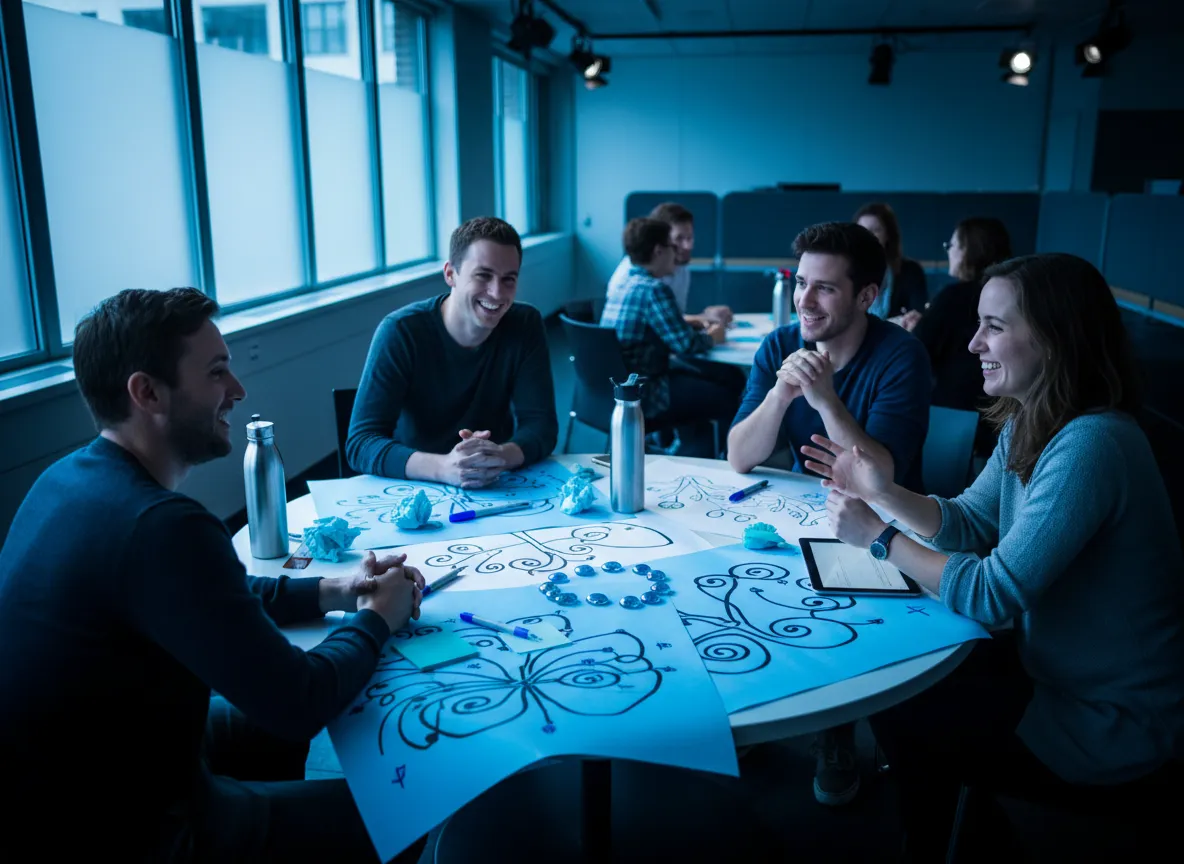
If at any time you find yourself in a situation where you are neither learning nor contributing, use your two feet and move to a place where you can. This empowers participants, guarantees engagement, and cross-pollinates ideas across the entire event.
What Emerges
From Conversation to Action
Ownership
People take responsibility for the issues they care about and the actions that follow.
Cross-Functional Collaboration
Conversations naturally connect people across roles, departments, and perspectives.
Innovation
New ideas emerge as participants explore opportunities unconstrained by traditional structures.
Meaningful Action
Conversations lead to practical next steps, commitments, and ongoing initiatives.

Virtual Facilitation
Open Space Online
Distance no longer needs to limit participation, collaboration, or innovation. Open Space Technology translates remarkably well to virtual environments, enabling diverse groups to self-organize, explore important challenges, and generate meaningful outcomes regardless of location.

Inclusive Participation
Engage diverse perspectives across locations, functions, and stakeholder groups without the constraints of geography.

Virtual Self-Organization
Participants choose where they can contribute most effectively, creating higher engagement and ownership.

Cross-Functional Connection
Conversations naturally connect people who might not otherwise interact, fostering collaboration and knowledge sharing across the organization.

Action and Follow-Through
Insights, commitments, and action plans are documented in real time, helping translate conversation into measurable progress.
CLARITY
Expert Answers
With years of deep experience facilitating transformative Open Space events for organizations, we understand the logistical and strategic questions that arise. Here is everything you need to know about ROI, group dynamics, and how we bring structure to unstructured dialogue.
What is the ideal group size for an Open Space event?
Open Space Technology is incredibly scalable. We have successfully facilitated sessions for as few as 10 executive leaders and as many as 1,000+ stakeholders. The methodology adapts fluidly to the size of your group.
How do you measure the ROI of an Open Space gathering?
ROI is measured through actionable outcomes. Because participants create the agenda based on pressing needs, the resulting action plans are highly relevant. Organizations typically see accelerated problem-solving, increased cross-departmental collaboration, and higher employee engagement.
How long does an Open Space Technology session typically last?
While a single complex issue might be addressed in a half-day session, the most transformative results occur over two to three days. This allows adequate time for divergence, convergence, and the development of concrete action plans.
Can Open Space be effectively facilitated online or in hybrid settings?
Absolutely. We utilize specialized digital platforms to recreate the fluid, self-organizing nature of Open Space. Online participants can move freely between virtual breakout rooms, capturing notes and action items in real-time.
What logistics are required from our Canadian organization to host this?
For in-person events, you need a large room where chairs can be arranged in a circle, plus plenty of breakout spaces and blank walls for the agenda wall. We handle the facilitation framework, materials, and digital documentation.
AVAILABLE FOR LEADERSHIP TEAMS, ORGANIZATIONS & COMMUNITIES
Create Space for
What Matters Most
When organizations face complex challenges, the answers rarely come from a single leader or department. Open Space Technology creates the conditions for people to engage, collaborate, and take ownership of what emerges.
ElevateWork provides Open Space Technology facilitation for organizations, leadership teams, conferences, and communities across Canada and internationally.
Explore whether Open Space is right for your team, organization, or event.
Elevating the soul of teams to create capacity, resilience, and genuine connection across your organization.


